4 Outdoor Areas Commonly Integrated Into Interior Design Planning
Key Takeaways
- Outdoor areas are now commonly integrated into overall home layouts.
- Patios, gardens, balconies, and rooftop terraces each serve different functions.
- Proper planning improves ventilation, circulation, and usability.
- Interior design for landed properties often includes coordinated indoor-outdoor transitions.
- An experienced interior design company usually plans these spaces together instead of treating them separately.
Introduction
Outdoor spaces are no longer viewed as separate parts of the home. Today, in modern residential projects, they are often integrated directly into the overall layout to improve functionality and create smoother movement between indoor and outdoor living areas. This approach is especially important in interior design for landed properties, where homeowners generally have larger spaces available for custom planning.
An interior design company in Singapore commonly incorporates outdoor zones during the early design stage to ensure consistency in materials, accessibility, and space usage. Instead of being decorative additions alone, these areas are planned to support dining, entertainment, relaxation, and family activities.
1. Patio and Outdoor Dining Areas
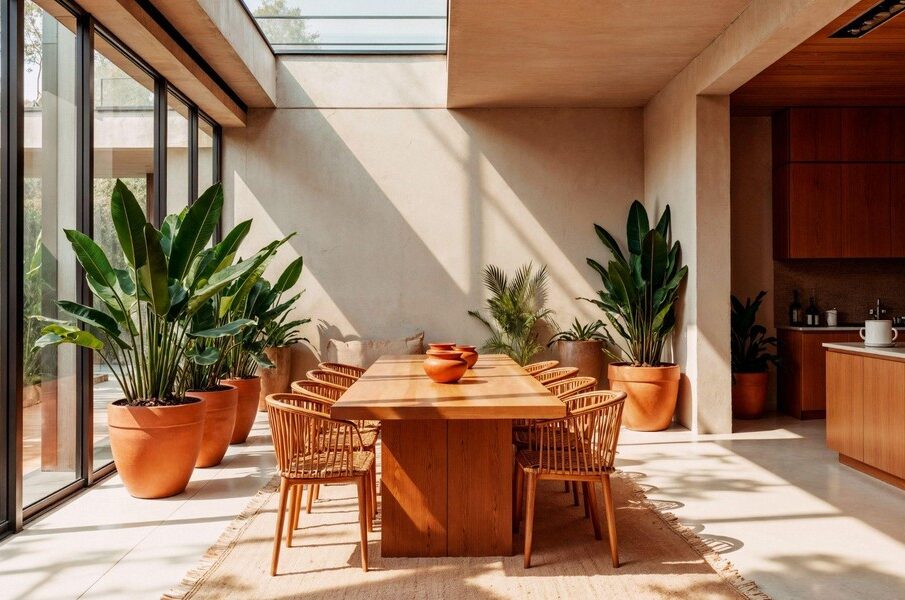
Patios are among the most commonly integrated outdoor spaces because they function as extensions of indoor living areas. Patios in many landed homes connect directly to living rooms or kitchens through sliding glass doors or open layouts. This instance creates better accessibility and improves the flow between indoor and outdoor spaces.
Outdoor dining areas are also popular for family meals and social gatherings. Designers usually focus on shelter placement, ventilation, lighting, and weather-resistant materials to make these areas more practical for daily use.
Flooring continuity is another common feature. Using similar flooring materials indoors and outdoors creates visual consistency throughout the property. Built-in seating and smaller dining layouts are often introduced in compact spaces to improve space efficiency.
2. Garden and Landscape Areas
Gardens remain important in interior design for landed properties because they influence both the appearance and atmosphere of the home. Well-planned greenery can improve privacy, soften architectural elements, and create a calmer environment around the property.
Designers frequently position windows, lounges, or dining spaces toward landscaped areas so that greenery becomes part of the interior experience. This approach creates a stronger visual connection between indoor and outdoor environments.
Landscape planning also involves practical considerations such as drainage, maintenance, and airflow. Poorly positioned landscaping may obstruct ventilation or increase upkeep requirements. Due to this, designers often coordinate with landscape specialists during the planning stage.
Some homeowners also separate gardens into different zones. Front gardens may focus on presentation, while rear gardens are designed for family activities or relaxation.
3. Balconies and Semi-Outdoor Lounges
Balconies and semi-outdoor lounges are common in multi-storey landed homes because they provide additional usable space without major structural expansion. These areas are often connected to bedrooms, entertainment rooms, or family lounges.
Semi-outdoor lounges commonly include partial roofing, durable furniture, and ceiling fans to improve comfort. Designers also evaluate sun direction and airflow to reduce heat exposure during the day.
Many homeowners use these spaces as reading areas, casual gathering spots, or work-from-home corners. Their flexibility makes them useful for households that require quieter areas separate from the main living spaces.
An interior design company may also use balcony placement strategically to improve ventilation across multiple levels of the house.
4. Rooftop Terraces and Entertainment Decks
Rooftop terraces are increasingly included in modern homes to maximise available space. Instead of leaving roof areas unused, homeowners often convert them into entertainment decks or relaxation zones.
These spaces require careful planning because waterproofing, drainage, and structural support must all be properly managed. Designers may include shaded seating, outdoor kitchens, or modular furniture depending on the homeowner’s lifestyle requirements.
Rooftop terraces also help distribute activities across different levels of the home, improving overall space usage.
Conclusion
Outdoor spaces now play a major role in residential planning. Patios, gardens, balconies, and rooftop terraces each contribute differently to how homeowners use and experience their homes.
Due to this reason, many homeowners engage an interior design company that understands how to integrate indoor and outdoor environments effectively. Remember, in modern interior design for landed properties, outdoor planning is no longer treated as an afterthought but as part of the overall design strategy.
Contact Jialux Interior and learn how your indoor and outdoor spaces can function together.